



Vietnam is a country where the past and the present seem to walk side by side. In busy cities such as Hanoi and Ho Chi Minh City, modern buildings, cafés, motorcycles, and shopping centers fill the streets. Yet only a few steps away, visitors may find an old temple, a traditional market, a family-run food stall, or a neighborhood where customs have been passed down for generations.
This mixture of tradition and modern life is one of the most fascinating parts of Vietnamese culture. The country has a long history, diverse regional identities, strong family values, colorful celebrations, and a culinary tradition that has become famous around the world.
To understand Vietnam, it is not enough to visit its landmarks. Culture can also be discovered through the way people greet one another, share meals, celebrate important occasions, respect older family members, and prepare dishes that have been part of everyday life for decades.
Family Is at the Heart of Vietnamese Culture
Family has an important place in Vietnamese society.
For many Vietnamese people, the family is not simply a group of individuals living under the same roof. It represents connection, responsibility, tradition, and continuity between generations.
Respect for parents and grandparents is deeply valued. Younger family members are commonly expected to show politeness toward older relatives and to consider their advice in important situations.
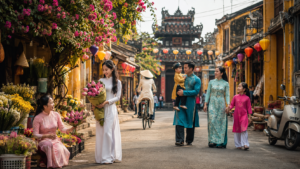
Vietnamese Culture
Family gatherings are especially meaningful during major celebrations.
It is common for relatives who live or work far from home to travel long distances to reunite with their families during important holidays. Meals become more than just opportunities to eat. They are moments for conversation, storytelling, remembrance, and strengthening relationships.
This sense of togetherness can also be seen in Vietnamese dining culture.
Instead of everyone ordering an entirely separate meal, families often share several dishes placed in the middle of the table. Rice, vegetables, meat, fish, soup, and dipping sauces may all be enjoyed together.
The table becomes a social space.
People eat, talk, pass dishes around, and spend time with one another.
Respect for Ancestors
One distinctive aspect of Vietnamese culture is ancestor veneration.
Many Vietnamese households maintain a family altar where photographs, flowers, incense, fruit, or other offerings may be placed in remembrance of relatives who have passed away.
The practice reflects a belief that family connections do not simply disappear after death.
During important occasions, families may light incense and remember their ancestors before beginning celebrations or meals.
This tradition is particularly visible during Tết, the Vietnamese Lunar New Year.
For visitors unfamiliar with the custom, an ancestor altar may initially appear purely religious. In reality, it can also represent gratitude, family memory, respect, and continuity between generations.
It reminds people of where their families came from.
Tết: The Most Important Celebration
Among Vietnam’s many festivals, Tết Nguyên Đán, usually called Tết, holds a special place.
Tết marks the Lunar New Year and is one of the most important periods of the year for Vietnamese families.
Preparations may begin well before the actual holiday.
Homes are cleaned.
Food is prepared.
Decorations appear.
People purchase flowers and gifts.
Families prepare to welcome relatives and visitors.
One popular tradition involves giving children and younger family members small red envelopes containing lucky money. The gesture symbolizes good wishes and prosperity for the year ahead.
Different regions may decorate their homes differently.
In northern Vietnam, peach blossoms are closely associated with Tết, while yellow apricot blossoms are especially popular in the south.
Food also plays a central role in the celebration.
Traditional dishes are prepared not merely because they taste good, but because they carry family memories and cultural meaning.
Vietnamese Hospitality
Vietnamese hospitality is often warm but may appear slightly different from the customs visitors know at home.
Guests can be offered tea, fruit, snacks, or a meal when visiting someone’s house.
Sharing food is one way of showing friendliness.
Vietnamese communication can also place importance on politeness and social harmony. Age and relationships sometimes influence how people address each other, and Vietnamese has various ways of referring to people depending on age, gender, and social relationship.
This can seem complicated to someone learning the language.
However, it reflects something important about the culture: relationships matter.
How you speak to someone can show familiarity, affection, respect, or social distance.
The Street Is Part of Everyday Life
One of the best places to observe Vietnamese daily culture is not necessarily inside a museum.
It is the street.
Early in the morning, food vendors begin preparing breakfast. Small plastic stools appear outside cafés and restaurants. People stop for coffee before work. Markets become busy with vegetables, herbs, fruit, seafood, meat, flowers, and household goods.
Motorcycles move constantly through the streets.
Later in the evening, sidewalks may become places for eating, drinking coffee, meeting friends, or simply watching city life unfold.
Street food is therefore not separate from Vietnamese culture.
It is part of it.
Many dishes that foreigners consider famous Vietnamese specialties are ordinary everyday meals for local people.
And perhaps the best example is phở.
Phở: More Than Just Noodle Soup
Phở is probably the Vietnamese dish most widely recognized internationally.
At first glance, it seems simple: noodles, broth, herbs, and meat.
But a good bowl of phở depends heavily on its broth.
Beef or chicken broth may be slowly prepared with aromatic ingredients and spices to produce a flavor that is rich without becoming overwhelmingly heavy.
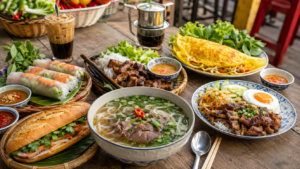
Traditional Vietnamese
Rice noodles form the base of the dish.
Depending on the version, thin slices of beef, chicken, herbs, spring onions, or other ingredients may be added.
Regional preferences also matter.
Phở in northern Vietnam can differ from versions commonly served in the south. Southern-style phở is often accompanied by a wider selection of fresh herbs and additional condiments.
For many people, phở is breakfast.
For others, it can be lunch, dinner, or even a late-night meal.
Its worldwide popularity shows how a seemingly modest dish can carry a remarkable cultural identity.
Bánh Mì: Vietnam Inside a Baguette
Another internationally famous Vietnamese food is bánh mì.
The baguette itself reflects Vietnam’s historical encounter with French cuisine, but Vietnamese cooks transformed it into something distinctly local.
A bánh mì sandwich can contain combinations such as grilled meat, pâté, Vietnamese cold cuts, pickled vegetables, cucumber, coriander, chili, and sauces.
The result is a fascinating combination of textures.
The bread is crisp.
The vegetables are fresh.
Pickles provide acidity.
Meat adds richness.
Fresh herbs provide fragrance.
Chili brings heat.
Different vendors create their own combinations, so buying bánh mì from two shops on the same street may produce surprisingly different experiences.
It is convenient, affordable, flavorful, and easy to eat, making it one of Vietnam’s most recognizable everyday foods.
Gỏi Cuốn: Freshness Wrapped in Rice Paper
Vietnamese cuisine is often admired for its use of fresh ingredients.
Gỏi cuốn, commonly called fresh spring rolls, represents this quality particularly well.
Rice paper is wrapped around ingredients such as rice noodles, herbs, vegetables, shrimp, or pork.
Unlike fried spring rolls, gỏi cuốn are usually served fresh.
They are often accompanied by a dipping sauce that adds another layer of flavor.
What makes the dish memorable is not one powerful ingredient but the balance between several elements.
Soft rice paper.
Fresh herbs.
Crunchy vegetables.
Tender filling.
Savory dipping sauce.
Vietnamese cuisine frequently relies on this kind of equilibrium.
Instead of allowing one flavor to dominate completely, cooks may combine sweetness, saltiness, sourness, freshness, heat, and umami.
Bún Chả and the Flavor of Hanoi
Hanoi has its own culinary personality, and bún chả is one of the dishes closely associated with the capital.
The meal generally combines grilled pork, rice vermicelli, fresh herbs, and a dipping broth or sauce.
The aroma of pork cooking over charcoal can be just as memorable as the dish itself.
Rather than mixing everything into one bowl immediately, diners can combine the ingredients according to preference.
A little noodle.
A piece of grilled pork.
Some herbs.
Then a dip into the sauce.
It makes the meal interactive and personal.
Bún chả demonstrates an important characteristic of Vietnamese food: texture and freshness are often just as important as seasoning.
Bánh Xèo: Crispy and Colorful
The name bánh xèo refers to a crispy Vietnamese pancake.
Its bright yellow appearance often comes from turmeric rather than eggs.
The thin pancake may contain ingredients such as pork, shrimp, bean sprouts, and spring onions.
Instead of simply eating the pancake by itself, diners often break off pieces and combine them with fresh herbs or vegetables before dipping them into sauce.
The contrast is wonderful.
Warm and crispy pancake meets cool, fragrant herbs.
Rich filling meets fresh vegetables.
Savory flavor meets tangy dipping sauce.
It is a dish that feels both indulgent and refreshing at the same time.
Cơm Tấm: A Humble Ingredient Becomes a Favorite
Cơm tấm, or broken rice, is strongly associated with southern Vietnam, particularly Ho Chi Minh City.
Historically, broken rice grains were considered less valuable than whole grains. Over time, however, they became the foundation of a beloved meal.
A typical serving may include broken rice with grilled pork, vegetables, pickles, egg, fish sauce, or other accompaniments.
Its history makes the dish especially interesting.
An ingredient once considered imperfect became something people actively seek out.
That transformation reflects a broader strength found in many traditional cuisines: resourcefulness.
Good food does not always begin with expensive ingredients.
Sometimes it begins with knowing how to use what is available.
Vietnamese Coffee Has Its Own Personality
Food is only part of Vietnam’s culinary identity.
Coffee deserves its own conversation.
Vietnam is famous for strong coffee, commonly prepared using a small metal filter known as a phin.
The coffee slowly drips into a cup rather than being brewed instantly.
One popular version is cà phê sữa đá, coffee mixed with sweetened condensed milk and served over ice.
It is strong, sweet, creamy, and refreshing.
There is also egg coffee, especially associated with Hanoi. It combines coffee with a creamy egg-based mixture, producing something that feels almost halfway between a drink and a dessert.
Coffee shops in Vietnam also serve a social purpose.
People do not always visit simply for caffeine.
They meet friends.
Talk.
Work.
Sit for long periods.
Watch the street.
Coffee becomes an excuse to slow down for a while.
Regional Differences Make Vietnamese Food More Interesting
Vietnam stretches a long distance from north to south, and regional differences have shaped its cuisine.
Northern food is often associated with restrained seasoning and delicate flavors.
Central Vietnamese cuisine can be more intense, spicy, and visually elaborate. The former imperial capital of Huế has a particularly distinctive culinary heritage.
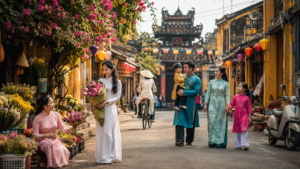
Vietnamese Tet Celebration: Family, Tradition
Southern Vietnamese food often makes extensive use of herbs, sweetness, tropical ingredients, and abundant produce.
These descriptions are only general tendencies, not strict rules.
The important point is that there is no single Vietnamese cuisine.
There are many regional traditions living under the same national identity.
Traveling through Vietnam therefore becomes a culinary journey as much as a geographical one.
Markets Tell Their Own Cultural Story
Traditional markets are another excellent place to understand Vietnamese food culture.
Fresh herbs are piled beside vegetables.
Fish may have arrived only hours earlier.
Tropical fruits introduce colors and smells unfamiliar to foreign visitors.
Vendors prepare noodles, soups, rice dishes, sweets, and drinks within small spaces.
Markets reveal how closely Vietnamese cooking is connected to fresh ingredients.
Herbs such as coriander, Vietnamese mint, basil, and other local greens are not merely decorative toppings. They can play an essential role in the flavor and texture of a meal.
Freshness creates contrast.
A rich grilled meat dish feels lighter when eaten with herbs.
A warm soup becomes more aromatic.
A fried dish feels less heavy when accompanied by raw vegetables.
Food as Cultural Memory
Perhaps the most beautiful thing about Vietnamese food is that it is rarely just about eating.
A recipe can remind someone of childhood.
A particular soup may recall a grandmother’s kitchen.
A Tết dish can remind a family of previous New Year celebrations.
A street-food stall may have customers who have eaten there for decades.
Recipes change slightly from household to household, and that variation is part of the culture.
There may not always be one universally “correct” version of a traditional dish.
Families develop preferences.
Regions create variations.
Cooks add personal touches.
Food survives because people continue preparing it, sharing it, and adapting it.
Vietnam Is Best Understood Through Everyday Life
Vietnam’s grand temples, historic towns, landscapes, and museums are important.
But culture often reveals itself most clearly in ordinary moments.
A family sharing dinner.
An elderly person lighting incense at an ancestor altar.
Friends drinking coffee on small stools beside the street.
A vendor preparing breakfast before sunrise.
Relatives traveling home for Tết.
A bowl of noodles served from a recipe perfected over many years.
These details turn culture from something described in books into something alive.
Conclusion
Vietnamese culture is shaped by family, history, respect for tradition, community, adaptability, and a strong connection between generations. At the same time, modern Vietnam continues to evolve rapidly, creating an intriguing balance between old customs and contemporary lifestyles.
Its cuisine reflects the same character.
Phở offers warmth and depth. Bánh mì combines different culinary histories in one sandwich. Gỏi cuốn celebrates freshness. Bún chả carries the aroma of Hanoi’s streets. Bánh xèo brings together crispness and herbs, while cơm tấm shows how humble ingredients can become cultural favorites.
And then there is Vietnamese coffee—strong, patient, and unmistakably distinctive.
To explore Vietnam through its food is to discover more than recipes. Every meal can reveal something about geography, history, family, resourcefulness, and the Vietnamese approach to everyday life.
That is why Vietnamese cuisine is so memorable. The flavor may be the first thing people notice, but behind every bowl, plate, roll, and cup is a much larger story about the people and culture of Vietnam.