



Introduction
Asian food is not a single cuisine but a broad family of culinary traditions shaped by geography, religion, trade, agriculture, and long histories of migration. What links many Asian food systems is not one flavor profile, but a common emphasis on grains, vegetables, legumes, herbs, spices, fermented foods, and carefully balanced cooking methods. Scientific literature increasingly treats traditional Asian food patterns as important not only for cultural heritage, but also for public health, sustainability, and metabolic health. Reviews of dietary patterns in Asia note that many traditional diets emphasize plant foods, soy or legumes, unsweetened tea, herbs, spices, and fermented foods, while some patterns are also associated with lower obesity risk and better cardiovascular outcomes than more heavily Westernized diets.
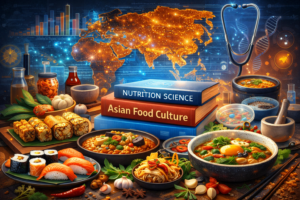
Asian Culture
Today, Asian cuisines are receiving renewed scholarly attention because they sit at the intersection of nutrition science, cultural identity, and food sustainability. Traditional dietary models such as Japanese washoku, Chinese dietary patterns, and Southeast Asian fermented-food traditions are being studied for their possible links with longevity, gut health, and diet quality. At the same time, researchers also warn that rapid dietary transition in many Asian societies has increased the intake of processed foods, sugar, animal fat, and sodium, creating tension between heritage diets and modern convenience eating.
The Diversity of Asian Food Traditions
Asian cuisine includes highly distinct regional systems. East Asian cooking often highlights rice, noodles, soy products, seafood, broth-based dishes, pickled vegetables, and fermented condiments. Southeast Asian cuisines frequently combine rice, herbs, chilies, coconut, fish products, and complex sour-salty-sweet flavor layering. South Asian traditions often feature pulses, flatbreads, rice, yogurt, spices, and vegetable-forward dishes, with substantial variation across regions and communities. Because of this diversity, it is more accurate to speak of “Asian food traditions” than a single “Asian diet.” Reviews of dietary patterns in Asia also stress that the region contains multiple eating models rather than one uniform nutritional template.
This diversity matters from both a cultural and scientific standpoint. A traditional Japanese meal differs greatly from a Korean fermented-food table, an Indonesian tempeh-centered dish, a Cantonese soup-based menu, or an Indian thali. Yet many of these traditions share culinary principles that nutrition researchers find meaningful: moderate portioning, strong use of plant ingredients, fermentation, seasonal eating, and flavor development through umami, herbs, and spices rather than heavy reliance on sugar or processed additives. Washoku, for example, has been described in the literature as a dietary model characterized by high consumption of fish and soybean products, lower intake of animal fat and meat, and effective use of umami to maintain palatability.
Traditional Asian Diets and Health
A recurring theme in the literature is that many traditional Asian eating patterns are associated with favorable health characteristics when compared with heavily industrialized food systems. A 2024 review on dietary patterns and cardiovascular disease in Asia describes traditional Asian diets as rich in fruits, vegetables, and plant foods such as soy or lentils, with regular use of fermented foods, herbs, spices, and unsweetened tea.
Similarly, research on traditional Chinese dietary patterns reports that a traditional Chinese diet was overall inversely associated with obesity risk and weight gain, though the evidence for some other outcomes was more mixed. This is an important point: journal evidence does not support simplistic claims that all traditional foods are automatically “healthy,” but it does suggest that many long-standing Asian dietary models contain protective structural features, especially when they remain centered on minimally processed foods.
Japanese dietary research offers another strong example. Reviews on washoku suggest that its characteristic pattern of fish, soy products, lower animal fat, and umami-guided meal composition may contribute to healthy eating and may be linked to Japan’s long-standing reputation for longevity. The strongest interpretation is not that one cuisine alone “causes” long life, but that traditional meal structure, food variety, and restrained use of highly processed foods may support favorable health outcomes over time.
Fermented Foods as a Major Strength of Asian Cuisine
One of the most scientifically interesting features of Asian food is the central role of fermentation. Across Asia, fermented foods include kimchi, miso, natto, tempeh, fermented soy pastes, fish sauces, pickled vegetables, rice ferments, and many local products that are still understudied outside their home regions. Review articles describe fermented foods as valuable because fermentation can improve shelf life, transform flavors, and generate bioactive compounds such as organic acids, peptides, and phenolics.
Korean traditional fermented foods have attracted significant attention. A 2018 review describes traditional fermented foods as having nutritive and functional properties and notes that they often contain high levels of probiotic organisms, though the authors also point out that spontaneous fermentation can create variation in quality from batch to batch. This balance is important: fermented foods can offer nutritional and microbiological benefits, but food safety and production consistency still matter.
Older and newer literature also emphasizes the wider Asian context of fermentation. A widely cited review on lactic acid fermented foods in Asia highlights the diversity of Asian fermented products and their beneficial effects, while more recent reviews connect fermented foods with healthy longevity and bioactive compounds.
Tempeh as a Case Study
Tempeh is one of the clearest examples of a traditional Asian food now receiving global scientific recognition. Reviews describe tempeh as a traditional Indonesian fermented food with potential beneficial effects tied partly to isoflavones and other bioactive compounds. More recent work also presents tempeh as a valuable plant-based protein food linked in the literature to cholesterol-lowering potential, gut-related benefits, and broader metabolic relevance, although many of these claims still depend on the strength and quality of the available studies.
Tempeh’s significance goes beyond nutrition. It also demonstrates how Asian food traditions often combine affordability, local ingredients, and traditional processing knowledge. In a global food environment increasingly concerned with plant-based protein and sustainability, tempeh stands out as both culturally rooted and scientifically relevant.
Asian Food, Gut Health, and Metabolic Change
Research increasingly connects diet patterns in Asia to gut microbiota and chronic disease. A review on the “Asian gut” argues that dietary change across Asia, especially the movement away from traditional food structures toward more processed, energy-dense eating, may contribute to obesity and type 2 diabetes through gut microbiota-related pathways. The concern is not that traditional Asian foods are disappearing entirely, but that they are often being displaced by modern ultra-processed patterns with lower fiber and less fermentation.
This shift matters because many traditional Asian meals naturally include fiber-rich vegetables, legumes, fermented products, and plant-based side dishes that may support better gut ecology than heavily refined food systems. The evidence here continues to develop, but the direction is clear: dietary transition in Asia is not only a cultural change; it is also a biological and public-health issue.
Food Culture, Identity, and Sustainability
Asian food is important not only because of nutrients, but because of meaning. Journal literature on traditional foods repeatedly emphasizes their role in cultural identity, intergenerational knowledge, biodiversity, and sustainable food systems. A 2023 article on traditional foods and nutrition security argues that traditional cuisines reflect local biodiversity and knowledge systems and can contribute to more resilient food futures.
This perspective is especially valuable in discussions of modernization. When food becomes more industrialized, convenience often improves, but culinary identity can weaken. Traditional Asian cuisines often preserve methods of low-waste cooking, seasonal ingredient use, and flavor-building techniques that make plant-centered dishes satisfying without depending on excessive meat or highly processed ingredients. More recent scholarship on Japanese home cooking and sustainable healthy diets also suggests that traditional Japanese cuisine aligns with sustainability principles through its seasonal, plant-forward, and minimally processed character.
In this sense, Asian food traditions should not be seen as merely nostalgic. They are active knowledge systems. They preserve culinary memory while also offering practical models for contemporary food policy: moderation, diversity, fermentation, plant-forward meal design, and efficient use of local ingredients.
The Challenge of Modernization
Despite these strengths, the literature does not romanticize Asian food without qualification. Asia is experiencing rapid urbanization, changing food environments, migration, and rising exposure to global processed-food markets. A review of food environments in Southeast Asia found that dietary behaviors are strongly shaped by social, cultural, and economic pressures, with food affordability acting as a major barrier to healthier diets.
This means that praising traditional Asian food is not enough by itself. Healthier outcomes depend on whether people still have access to traditional ingredients, time to cook, and social conditions that support balanced meals. If those conditions weaken, even regions with strong culinary heritage can shift toward less favorable eating patterns. Recent reviews on Asian dietary transitions also show that acculturation and modernization can alter both health and sustainability outcomes.
Conclusion
Asian food deserves serious attention in nutrition and cultural studies because it combines deep culinary heritage with practical relevance for modern health debates. Journal literature suggests that many traditional Asian dietary patterns are rich in vegetables, legumes, soy, fish, herbs, spices, tea, and fermented foods, and that these features may support better diet quality and favorable metabolic outcomes when compared with more Westernized processed-food patterns. At the same time, the research also shows nuance: benefits depend on preparation methods, social context, food access, and the degree to which traditional structures are maintained.
The strongest lesson from the literature is not that all Asian foods are automatically healthy, but that many Asian food traditions contain durable principles worth preserving: balance, variety, fermentation, plant-centered eating, cultural continuity, and skillful flavor development. In a world searching for healthier and more sustainable diets, Asian cuisine offers not only delicious meals, but also a valuable body of lived food knowledge supported by growing scientific interest